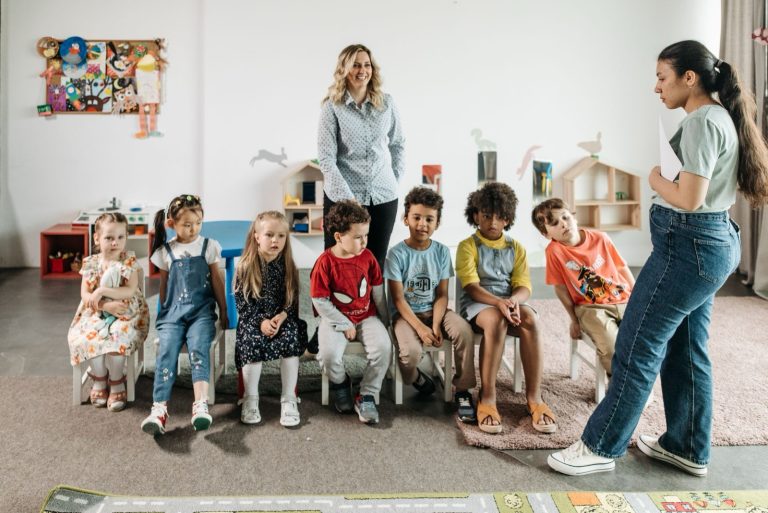
Fortune Kindergarten, part of Xiehe Education Group, is a preschool founded with the approval of the Shanghai Municipal Education Commission for Chinese and international children aged two to six. Across ten campuses in Pudong, Minhang, Qingpu and other districts of Shanghai, children grow up in a bilingual environment — and home-school partnership has always been written into the school’s founding philosophy. For years, though, the medium that carried it was a paper contact book.
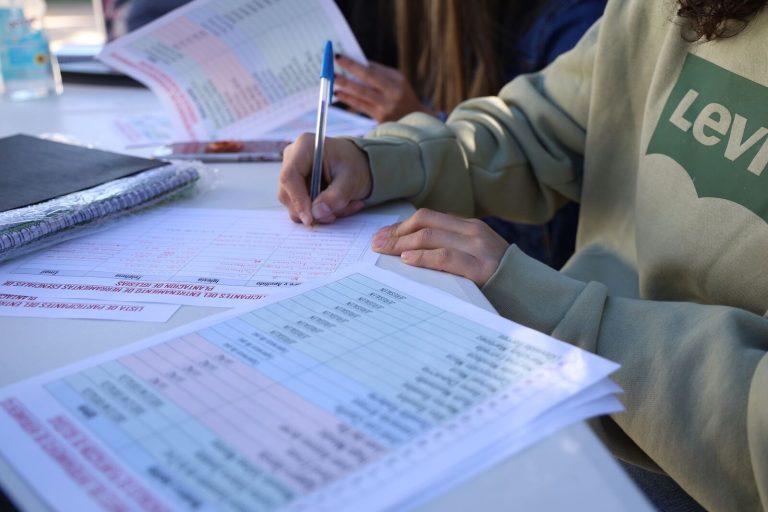
Before the mini program, communication with families rested on three things: a paper contact book that traveled home once a week, the notice board outside each classroom, and class group chats. What a child ate at lunch and how the afternoon nap went lived in a few lines of handwritten comments; notices went up on walls and messages went out in chats, but whether parents had actually seen them, the school could never confirm.
In March 2020, Fortune decided to move home-school communication wholesale onto a WeChat mini program — so that a teacher’s observations no longer waited for a weekly round and reached every family the same day.

At the end of August that year, the Fortune Kindergarten mini program went live across all eight campuses — 2,144 enrolled children, 153 teacher accounts and 97 classes in its first year. Principal review was built in from day one: teachers’ notices and posts reach parents only after a principal has approved them. The paper booklet became a daily entry: selecting students by date and class, teachers rate six items — snacks, lunch, nap, learning, play and physical activity — on a 1–5 scale with written comments, saved and checked before publishing, and retractable if something slips through. Parents see their child’s day the same evening.
Before, the contact book was opened once a week. Now parents tap it open in the evening, and what their child ate and how they slept that day is all there — our communication has gone from a weekly report to a live feed.
Anna, principal of Fortune Hongqiao Kindergarten
Class teachers send three kinds of notices — school-wide, class and urgent — and can see which parents have read each one; life teachers post meal and medical updates. In the first year, the eight campuses published 4,289 class posts; a single school-wide notice at Fortune Tiandi reached 126 of 213 families; and in its first month the mini program averaged more than 1,200 visits a day. Photos and videos in the posts can be downloaded from the web version and passed on to grandparents at home.
A companion admissions system moved the whole application journey online, from pre-registration and review to formal enrollment and payment confirmation: the system checks age eligibility by birth date, shows different form fields depending on nationality, and hands parents an application number and queue position the moment they submit.
In 2026 the group introduced a new generation of the contact book feature: principals gathered to align on how it should be rolled out, teachers received bilingual manuals and demo videos, and the operating steps were broken down into step-by-step training materials that reached campus after campus. For a school where Chinese and English share every classroom, the bilingual manuals also removed the barrier for international teachers.
At Hongqiao, 220 children in 12 classes generated more than 1,000 contact book entries and more than 60 class posts in a single week.
For Fortune, the mini program hasn’t replaced teachers’ observations — it just lets those observations reach parents the same day. Parents don’t just look; they get a full picture of everything their child is doing at kindergarten, and the conversations about the child at home have become richer.
Anna, principal of Fortune Hongqiao Kindergarten
From paper to fingertip, what Fortune changed was not the substance of home-school partnership but the moment it arrives. A teacher’s observations are still observations — how much snack was eaten, how soundly a child napped, whether today’s learning and play brought a new attempt — what changed is that these words no longer wait for a booklet to make its weekly round. For Fortune, this is what technology at its most fitting looks like: inventing no new concept, simply carrying a founding idea nearly three decades old to the screen within every parent’s reach.