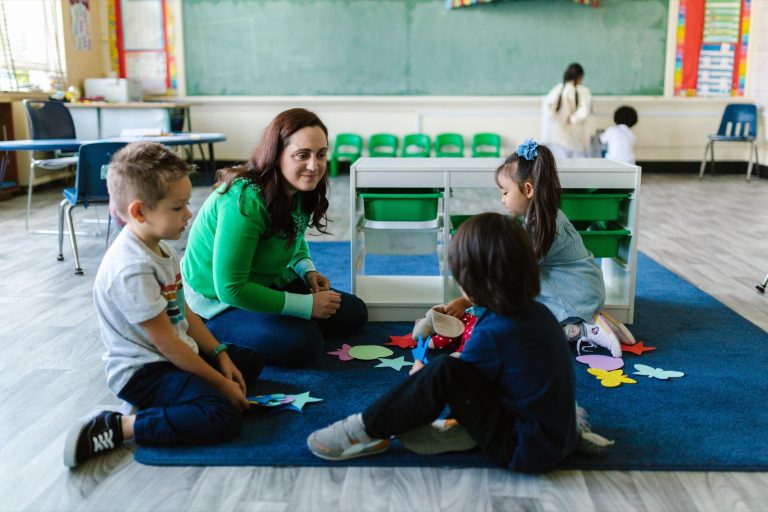
The EMW programme at Shanghai United International School, Jiaoke Campus (SUIS Jiaoke) serves students in grades six through eight — 19 classes and more than 400 students. Like many bilingual schools, its academic affairs team works with two assessment systems at once, Chinese and Western: how grades are recorded, what they look like, and how they reach parents — every step comes back to the question of standards.
Before the gradebook module went live, EMW’s grade data lived on teachers’ own computers: some kept Excel sheets, some worked from their own templates, and the names, types and measures of assessment items differed from one teacher to the next. At the end of a semester, the academic affairs team had to chase down the grades of all 19 classes, reconcile them, and merge them into a single report card to send home — a cycle of reminders and re-checks. The teachers were never the problem; there was simply no system holding the standard for them.
After testing, piloting and training, the gradebook module of the EMW programme went live in the school’s smart campus system, covering all 19 classes across grades six through eight. Since then, every grade has traveled the same pipeline from entry to release.
For each course, teachers set up assessment items in the system — name, grade type and measure, all three required — which fixes the standard before any grade is entered. When grades are submitted, the system automatically points out the students of a course who have no grades yet: who is missing, and in which course, without the team asking class by class. Assessment items can be edited or deleted, but a grade type and measure, once created, cannot be changed at will, so the same course stays comparable from year to year.
On the report card management page, the academic affairs team creates report cards by semester, follows submission progress across classes and courses, and exports the details with one click. Parents check their child’s grade report in the WeChat mini program — the report card that once waited for the office to compile it and find a way to send it home now reaches them the moment it is generated.
Collecting grades at the end of term used to be the part I dreaded most — 19 classes, 19 different spreadsheets. Now the assessment items are built to one standard, and the system names anyone who is missing. We only watch for “not submitted yet”, not for “submitted wrong”.
Ida, director of academic affairs
The system is not the only thing carrying the process. Under the mentor programme, each mentor follows the overall performance of their own students: the grade module brings every subject’s data together under one student, and mentor meetings and home-school communication all draw on the same record, so no one is working from a different version anymore.
What I need as a mentor is not the scores themselves — it is the complete picture of a child’s semester across subjects. Now the system assembles that picture for me.
Nico, Grade 7 mentor
For the EMW programme, the biggest change the gradebook module brought is not the Excel sheets it replaced. It is that, for the first time, the grades of more than 400 students share one standard: teachers record by the rules, the team follows the progress, and parents read by the semester. Grades, once a semester-end relay carried by hand, have become a quiet pipeline in the system.